

French Healthcare for Expats: Your Complete Guide to CPAM & Carte Vitale
Richard Hammond-Chambers-Borgnis · 6 July 2026
Moving to France is an exciting adventure, filled with dreams of picturesque villages, delicious food and a relaxed pace of life. But amidst the planning, one crucial aspect often raises questions: healthcare. As an expat, understanding how the French healthcare system works is paramount for your peace of mind and well-being. This guide demystifies the process, from initial registration with CPAM to obtaining your essential Carte Vitale, so you are well prepared for your new life in France.
France boasts one of the world’s best healthcare systems, renowned for its accessibility, quality of care and generous reimbursement rates. For expats, integrating into this system means gaining access to excellent medical services, often at a significantly lower out-of-pocket cost than in many other countries. Our goal at French Connections HCB is to make this transition as smooth as possible, with clear, actionable advice at every step.
Who is eligible for French healthcare as an expat?
Eligibility for the French healthcare system, known as Protection Universelle Maladie (PUMa), primarily depends on your residency status and the duration of your stay in France. Generally, if you are legally resident in France for more than three months and are working or can demonstrate stable and regular residency, you are eligible to join the state healthcare system. This applies to EU, EEA and Swiss citizens, as well as those from other countries who hold a valid long-stay visa or residence permit. For example, a non-EU citizen on a long-stay visitor visa will typically become eligible after three months of legal residency, provided they meet the other criteria of stable and regular residency.
The three-month rule and stable residency
The “three-month rule” is a critical initial hurdle for many expats: you must typically reside in France for at least three consecutive months before applying for state healthcare coverage. This period allows the French authorities to establish your stable and regular residency. During this initial waiting period, it is absolutely crucial to have comprehensive private health insurance to cover any medical emergencies or routine care. Without it, you could face substantial medical bills. We always advise clients to secure robust private insurance for this transitional phase.
Registering with CPAM: your first step to French healthcare
Registering with the Caisse Primaire d’Assurance Maladie (CPAM) is the essential first step for expats to access the French state healthcare system and obtain their Carte Vitale. This process, while sometimes perceived as bureaucratic, is straightforward once you understand the requirements. The CPAM is the local branch of the national health insurance fund, responsible for managing your healthcare rights and reimbursements.
Gathering your documents for CPAM
To successfully register with CPAM, you will need to compile a dossier of specific documents, which typically includes your passport, long-stay visa or residence permit, birth certificate (often requiring an apostille and certified translation), proof of address (such as a utility bill or rental agreement), and proof of income or resources. If you are employed, you will also need your work contract and payslips. Requirements can vary slightly depending on your personal situation and the local CPAM office, so always check their official website or contact them directly for the most up-to-date list. Having all your documents organised, and translated where necessary, will significantly speed up your application.
Submitting your CPAM application
Once your dossier is complete, you can submit your application to your local CPAM office. This can often be done by post or, in some areas, online. After your application is processed and approved, you will receive an “attestation de droits à l’assurance maladie”, a temporary certificate of your healthcare rights. This attestation allows you to access medical care and receive reimbursements even before your Carte Vitale arrives. The processing time can vary, but typically ranges from a few weeks to a few months. Patience is key during this stage, but rest assured, the benefits are well worth the wait.
Understanding the Carte Vitale: your key to reimbursements
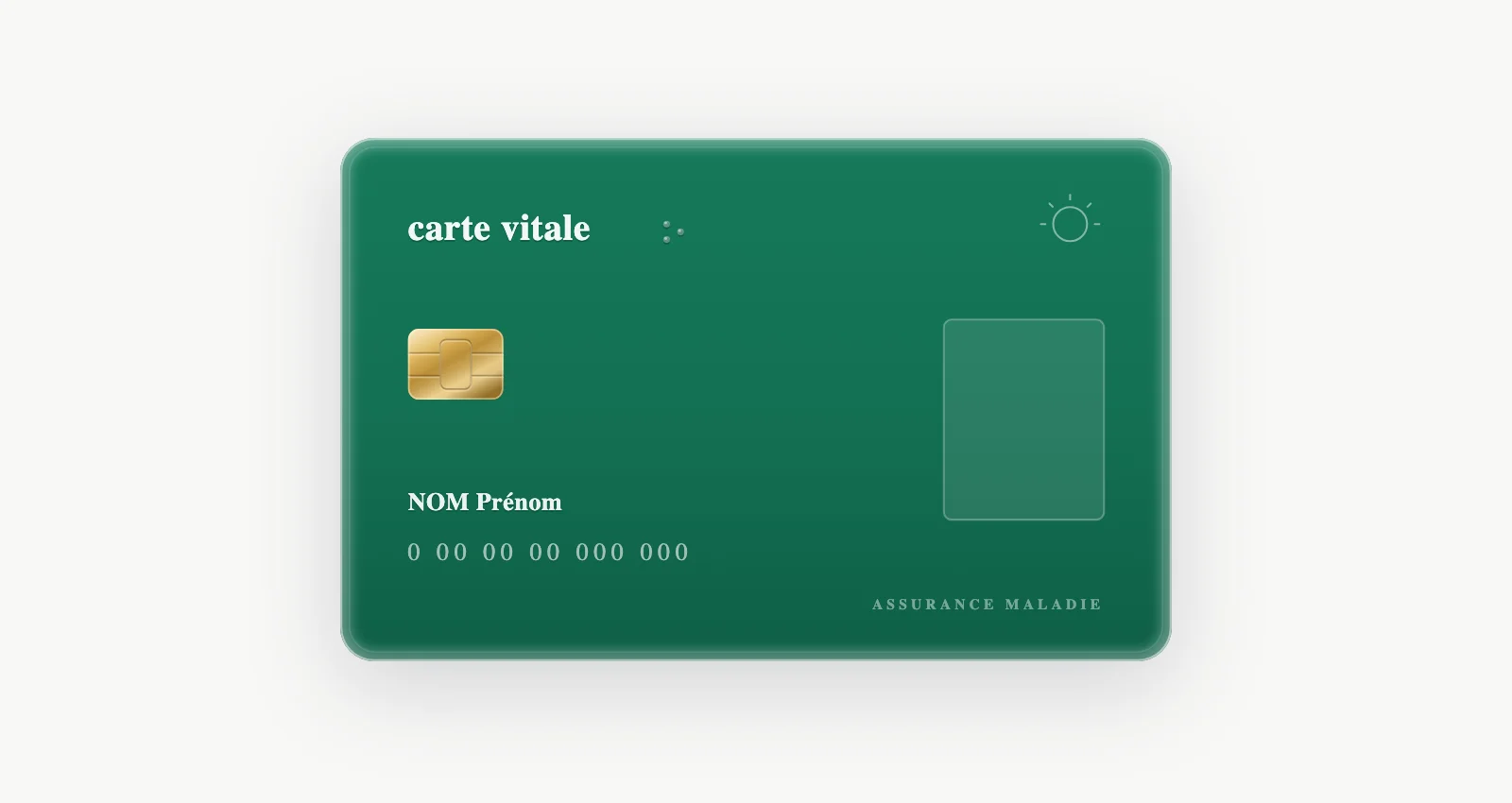
The Carte Vitale is a green smart card that serves as your electronic health insurance card in France, crucial for streamlined medical reimbursements and proving your entitlement to state healthcare. The card carries your administrative information, including your social security number, and simplifies the reimbursement process by electronically transmitting your medical expenses to CPAM. Using a Carte Vitale can reduce the reimbursement time from several weeks to just a few days, making it an indispensable tool for managing your healthcare costs.
How to obtain your Carte Vitale
After your CPAM application is approved and you have received your attestation, CPAM will invite you to apply for your Carte Vitale. You will need to supply a passport-style photo and a copy of your identity document. Once submitted, it can take several weeks for your Carte Vitale to be issued and mailed to your French address. There is no activation step: the card is ready to use as issued. Simply keep it up to date at the self-service update terminals found in pharmacies and CPAM offices, ideally once a year and whenever your circumstances change. And remember, even without your physical Carte Vitale, your attestation provides proof of coverage.
The benefits of your Carte Vitale
With your Carte Vitale, you simply present it to your doctor, specialist or pharmacy, and your medical information is instantly transmitted to CPAM. This means you typically only pay the “ticket modérateur” (the patient’s share of the cost) at the point of service, with CPAM directly reimbursing the remainder to your bank account. In many cases, particularly at pharmacies, you won’t pay anything upfront for prescription medications covered by the system. This “tiers payant” (third-party payment) system significantly reduces out-of-pocket expenses at the time of service.
Understanding top-up health insurance (mutuelle)
While the French state healthcare system covers a significant portion of your medical expenses, it does not cover the full cost of care, leaving a “ticket modérateur” or patient co-payment. This is where a “mutuelle”, or complementary health insurance, becomes invaluable for expats. A mutuelle covers the share of costs not reimbursed by CPAM, including dental care, optical services and sometimes even alternative therapies. For example, CPAM reimburses 70% of the standard €30 GP consultation, and a good mutuelle will cover the remaining 30%. One small charge always stays with you, though: the €2 “participation forfaitaire” deducted on each doctor’s consultation cannot, by design, be covered by a mutuelle, so expect to pay a couple of euros even with excellent cover.
Choosing the right mutuelle
Selecting a mutuelle can feel overwhelming due to the sheer number of providers and policy options available. Consider your individual health needs, budget, and whether you want coverage for specific treatments like extensive dental work or glasses. It is wise to compare several quotes and understand the different levels of coverage offered. Many mutuelles also offer family plans, which can be more cost-effective for those moving with dependants. French Connections HCB can provide guidance on reputable mutuelle providers to help you make an informed decision.
Accessing medical care in France: doctors, specialists and pharmacies
Accessing medical care in France is generally straightforward once you are integrated into the system. The process typically begins with your “médecin traitant” (treating doctor), who acts as your primary care physician and gatekeeper to specialist care. This system ensures coordinated care and often leads to higher reimbursement rates. Seeing a specialist without a referral from your médecin traitant may result in lower reimbursement from CPAM.
Finding a doctor and registering your médecin traitant
Finding a doctor in France is relatively easy; you can ask for recommendations, check online directories, or simply look for “cabinet médical” signs. Once you have chosen a doctor, you will need to declare them as your médecin traitant to CPAM. Your doctor will provide you with a form (“Déclaration de choix du médecin traitant”) to complete and send to CPAM. This formal registration ensures you benefit from optimal reimbursement rates and coordinated care within the system.
Specialists and hospital care
For specialist consultations (dermatologists, cardiologists and so on), your médecin traitant will typically provide a referral. This ensures that your care pathway is followed and maximises your reimbursement. In emergencies, you can go directly to the nearest hospital’s “urgences” (emergency department). French hospitals are generally well-equipped and provide high-quality care. For planned hospital stays, you will usually be admitted through a referral from your doctor or specialist.
Pharmacies and prescriptions
French pharmacies are easily identifiable by their green cross sign and are highly integrated into the healthcare system. Pharmacists are knowledgeable and can offer advice for minor ailments, and they dispense prescription medications. With your Carte Vitale, prescription costs are often partially or fully covered at the counter, with the remaining balance potentially covered by your mutuelle. Reimbursable medicines are covered at 15%, 30% or 65% depending on their assessed medical benefit (the SMR rating), with the most essential treatments covered in full.
Practical tips for expats navigating French healthcare
Key takeaway: don’t delay private insurance. Always secure comprehensive private health insurance to cover you from the day you arrive until your state coverage is active. You become eligible to apply after three months of residence, and processing takes time, so most new arrivals carry a full first-year policy. This is non-negotiable if you want to avoid significant medical bills.
Here are some additional practical tips to help you navigate the French healthcare system:
- Learn basic French medical vocabulary: even a few key phrases can make a big difference during appointments.
- Keep copies of everything: maintain a well-organised file of all your healthcare documents, including applications, attestations and reimbursement statements.
- Understand your reimbursements: familiarise yourself with the “taux de remboursement” (reimbursement rates) for different medical acts.
- Use online resources: the Ameli.fr website (the official health insurance portal) is a valuable resource for information, tracking reimbursements and managing your account.
- Open a French bank account: for seamless reimbursements, a French bank account is essential, as CPAM will deposit funds directly.
- Be patient and persistent: bureaucracy can be slow, but persistence pays off. Don’t hesitate to follow up on your applications.
Understanding the nuances of French healthcare is just one piece of the relocation puzzle. You can check which visa fits your situation and explore the cost of living in France to budget effectively for your new life.
Common questions about French healthcare for expats
Do I need private health insurance in France?
Yes. All expats need private health insurance to cover them from arrival until their French state coverage begins, and comprehensive cover is usually a requirement of the long-stay visa application itself. Even after joining CPAM, many expats choose to maintain a mutuelle (top-up insurance) to cover the portion of costs not reimbursed by the state. French Connections HCB can guide you on suitable private insurance options for your initial period.
What is the difference between CPAM and the Carte Vitale?
CPAM (Caisse Primaire d’Assurance Maladie) is the administrative body responsible for managing your state health insurance rights, processing applications and reimbursing medical costs. The Carte Vitale is the physical smart card issued through CPAM that electronically stores your health insurance information and streamlines the reimbursement process at medical appointments and pharmacies. One is the institution, the other is your access card.
Can I use my European Health Insurance Card (EHIC) in France?
The EHIC provides temporary, emergency medical care for EU, EEA and Swiss citizens visiting France, covering medically necessary treatment until your planned return home. It is not a substitute for comprehensive health insurance if you are moving to France to reside long-term. Once you become a resident, you will need to apply for French state healthcare through CPAM. The EHIC is designed for short-term stays, not for establishing residency.
Key takeaways
- Expats must reside in France for at least three months and demonstrate stable residency to be eligible for the state healthcare system (PUMa).
- Comprehensive private health insurance is essential from the day you arrive until your CPAM coverage is active.
- CPAM (Caisse Primaire d’Assurance Maladie) is the administrative body responsible for managing state health insurance and reimbursements.
- The Carte Vitale is the essential electronic smart card that streamlines medical reimbursements and proves your entitlement to state healthcare. There is no activation step; just keep it updated at pharmacy terminals.
- A mutuelle (complementary health insurance) is highly recommended to cover the portion of medical costs not reimbursed by CPAM, though the €2 participation forfaitaire always remains your responsibility.
- Registering a médecin traitant (treating doctor) is crucial for coordinated care and optimal reimbursement rates.
Navigating French healthcare might seem complex, but with the right information it is entirely manageable, and we have helped more than 1,200 families through it since 2017. If you would like personal guidance on your own move, book a consultation and we will map out every step with you.
Thinking about your own move?
Every relocation is different. Get your free quote, or talk your plans through with the team: visas, healthcare, property and everything in between.
Start Your MoveJoin the newsletter
Relocation guidance we only send by email, not published on the blog, and our free Moving to France guide as soon as you sign up.
By subscribing you agree to our Privacy Policy. We respect your data.