

How to Move to France With Your Dogs
Richard Hammond-Chambers-Borgnis · 12 October 2026
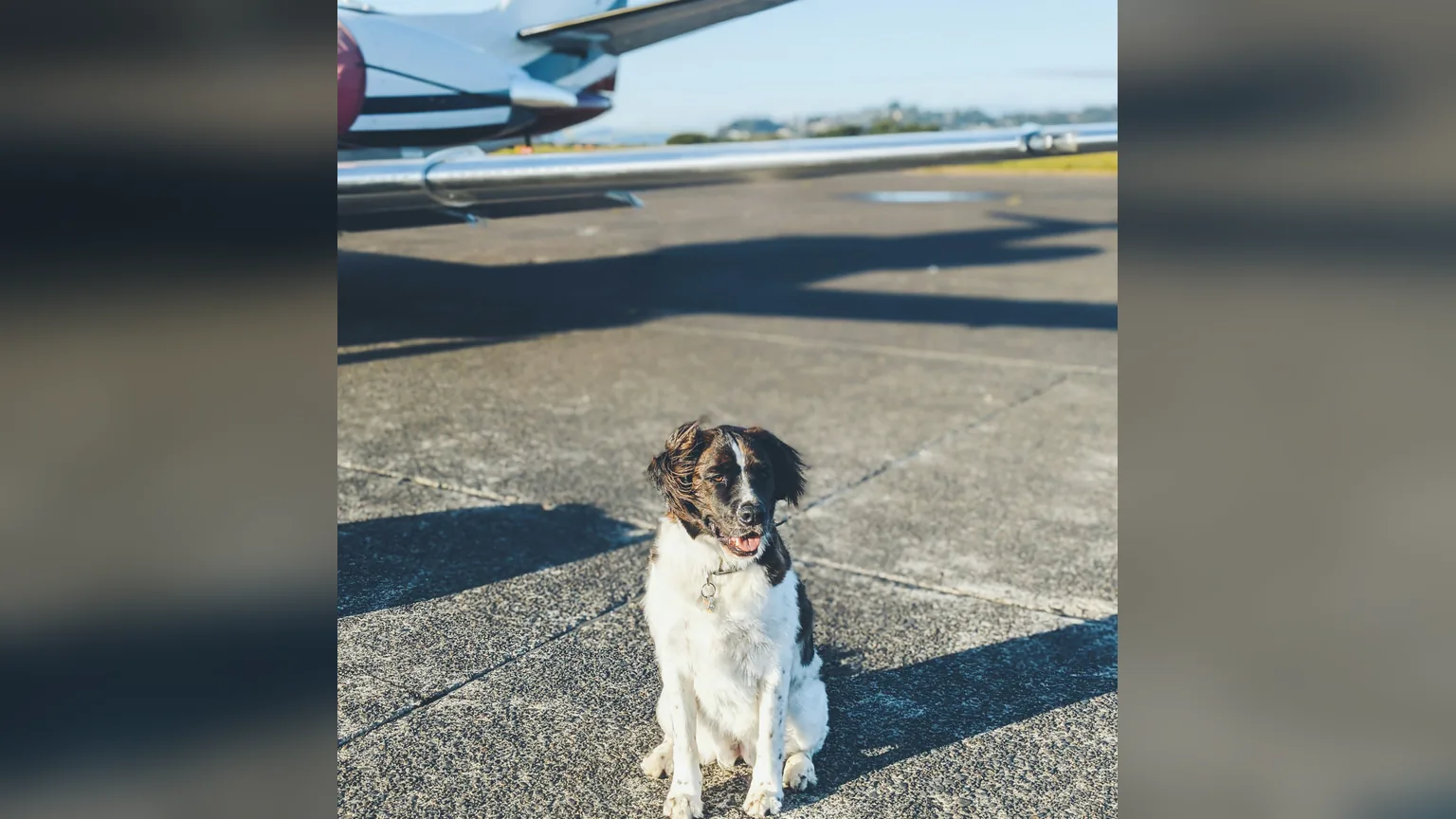
Everything you need to know about pet travel to France and relocating your dogs to France.
How do you get your dogs and your pets safely to France? I’m Richard Hammond, founder of French Connections HCB, and this is one of the questions we hear most, from comments on our YouTube channel and from clients planning to move. When I was in Beverly Hills talking to Americans moving to France, it came up again and again.
As a dog owner myself, with my own dog Charlie, it’s something I understand first-hand. So I sat down with Nathalie, our head of French Admin Support at French Connections HCB, to look at how to move safely and legally with your dogs. We covered flights, private charters and sea crossings, vaccination and paperwork timelines, pet passports, registration in France, and the practical steps after arrival, such as vet appointments and transport to your new home. Whether you are relocating alone or with family, getting these details right avoids delays at customs, travel problems and registration issues once you arrive.
But first, some of the legal and important things you need to know.
If you plan to move to France with your dogs from abroad, whether that is the USA, Australia, Canada or anywhere else in the world, you need to meet France and European Union entry requirements, choose the right travel option, and have the necessary documents ready for your furry (or scaly) friends.
For pets arriving from non-EU countries, that also means declaring them to customs. You can bring up to five pets under the non-commercial rules. Six or more are generally treated as a commercial movement with different paperwork.
With that out of the way, let’s look at the rest of the information you need to get your pet a passport to move to France.
Move to France With Your Dogs: What Are Your Pet Travel Options?
How your pet travels to France depends largely on the size and breed of your dog. Not every dog can fly in the hold of a commercial flight (nor would you want them to), and each airline has its own pet transport rules and restrictions, including cabin and cargo limits. Your main options are a commercial flight, a private shared charter flight or a crossing on the Queen Mary 2, so check each carrier’s rules first.
“It really does depend on the size and the breed of the dog. Not all dogs can fly just on commercial flights in the cargo,” says Nathalie.
Flying With Air France, La Compagnie or Lufthansa With Your Dog
Most people moving to France from the USA choose to fly. With Air France, pets under 8 kg can travel in the cabin, while larger dogs will need a crate in the hold, so check the airline’s boarding rules before you fly. La Compagnie flies from New York, and certain sizes of dog can travel in the cabin with you. Lufthansa is another good option. Whichever airline you choose, there will be fees involved.
As I put it to Nathalie: “If you’re going to go with Air France, they’re going to have to go in a crate and they’re going to be in the hold, so to speak.”
Flying on a Private Shared Charter With K9 Jets
My recommendation, if it’s within your budget, is to use a private charter such as K9 Jets. A private shared charter lets your dog fly in the cabin with you. Many people choose it if their dog is large or elderly, or wouldn’t be comfortable on other flights. You don’t need to buy a crate, and you can take your luggage with you. Smaller dogs can travel two per person, so some travellers can bring two dogs, a larger dog travels on your seat, and only an extremely large dog needs an additional seat of its own. Rules for service dogs are separate from standard pet policies and should be confirmed directly with the operator.
How Much Does It Cost to Fly Your Dog to France in a Private Jet?
Seats cost around $8,000 to $11,000 each, depending on the season. It is more expensive than a commercial flight, but it removes much of the organising you would otherwise do yourself, the level of care and attention for your pet is higher, and it is safer, as they are with you in the cabin and completely conscious.
“There’s lots of ways that does actually make it quite cost effective, because there’s not all the messing around in between and all the organisation that you have to do yourself,” explains Nathalie.
Flights can have waiting lists of several months. If your route isn’t listed, we can contact K9 Jets and put you on the waiting list. When there is enough interest, they will open a new flight. We have a very good relationship with K9 Jets through our pet relocation service, and they are familiar with our clients and what they expect.
“They have opened up flights for clients that were waiting for one for ages, and they got really lucky because there was lots of interest in it,” says Nathalie.
Crossing on the Queen Mary 2 With Your Dogs to France
The Queen Mary 2 is the alternative to flying, but places are very difficult to get and are booked more than a year in advance. It is also a very long journey across the Atlantic, which is why most of our clients fly.
As I said to Nathalie: “Most of our clients are going to choose to fly.”
Flying to London Instead of Paris to Move Your Dogs to France
Some clients choose to fly to London instead of Paris and then use driven pet transport to reach France. There are transport companies that specialise in this, which is something Nathalie helps organise on a day-to-day basis.
“I’ve even looked at recently clients that were thinking about actually travelling to London instead of travelling to Paris. We can organise that for them,” says Nathalie.
Case Study: Moving to France With Dogs in the Cabin
Mark and Patricia moved to Strasbourg with their dogs, Dash and Nick, who flew in the cabin with them on K9 Jets while we organised the rest of their move to France. Their story shows that you don’t have to put your dogs in the hold to bring them with you. You can read the full case study of their move to France with their dogs or watch their story below.
“I just don’t really believe in putting live things in baggage. I mean, you wouldn’t put your kids in baggage, would you?” they explain.

When Should You Start Planning Your Pet’s Move to France?
Nathalie’s recommendation is to start as early as you can. There is a strict timeline for vaccinations and paperwork before your pet can fly, and private charter flights can involve a wait of several months. EU health certificates must be completed by an authorised or official veterinarian, who will also check that your supporting documents are valid for travel. Once we know when you want to arrive in France, we send you a document setting out the dates for each step. We can handle that for you.
“We’ll set out a plan of when you need to get vaccinations and all your paperwork up and together, because there’s quite a strict timeline before you fly,” explains Nathalie.
If you’d like a plan built around your arrival date, get a free quote of costs for your move to France or speak to a member of our team to explore your options for moving to France.
Moving Your Dog to France From the USA: What You Need to Know
To bring your dog from the USA to France, plan early for the paperwork and the timing of the rabies vaccine. You need three things in the right order: an ISO-compliant microchip, a valid rabies vaccination given after the microchip, and an EU health certificate issued by a USDA-accredited vet and endorsed by the USDA. Get the order wrong and your dog may be refused entry or quarantined at your expense.
- Microchip first. Your dog needs a working microchip before its rabies vaccination, and your vet must scan it before vaccinating. ISO-compliant microchips are usually 15 digits long. A rabies vaccination given before the microchip doesn’t count.
- Rabies vaccination. After a primary vaccination, you must wait at least 21 days before travelling, or longer if the vaccine manufacturer recommends it. A primary vaccination given in the US is only valid for one year, even if it is a three-year vaccine, and any lapse resets it.
- EU health certificate. A USDA-accredited vet issues the certificate and submits it to the USDA. The USDA must endorse it within 10 days of your dog arriving in the EU, and the ink-signed, embossed original must travel with your dog. This timeline also helps you gather the other documents France’s entry requirements call for.
- New certificate format. New non-commercial health certificates are required from 1 October 2026, so make sure your vet uses the current form.
- Travelling with your dog. The non-commercial certificate applies when you are on the same flight as your pet, or a designated person travels with it within 5 days of you, and you are moving five pets or fewer. These rules apply to dogs arriving from any non-EU country, while some places, such as Canada, follow different documentation rules.
- No tapeworm treatment. France doesn’t require tapeworm treatment for dogs arriving from the US.
Before you book travel, verify the current timings and forms on the relevant official website, as customs authorities can check documents on arrival in French territory to reduce the risk of disease. Note that dates and document rules can change.
Once you arrive, you then have 8 days to start your dog’s I-CAD registration, covered below.
Dog Passport USA to France: What Do You Actually Need for the Rabies Vaccination?
France has specific entry requirements and import regulations for bringing a dog onto French territory from the USA, and there is no US pet passport for this journey. What people call a dog’s “passport” is the USDA-endorsed EU health certificate, which confirms the animal was inspected for disease before travel. Once your dog is registered in France, a French vet can issue an EU pet passport for future travel within Europe.
“For their passport, for these little guys, which is sort of funny, is basically the paperwork that you get stamped by the USDA,” explain Mark and Patricia, who moved their dogs to Strasbourg with our help.
Cost of Taking a Dog to France From the USA
The USDA charges $101 per certificate to endorse a pet health certificate that needs no laboratory tests, which covers dogs travelling from the US to France. Several pets can go on the same certificate. Your accredited vet’s own fees are charged on top of that.
The biggest cost is usually the journey itself. Airline pet fees vary by carrier, while a seat on a private shared charter with K9 Jets costs around $8,000 to $11,000.
Registering Your Pet With I-CAD When You Arrive in France
When you arrive in France, your pet must be registered with I-CAD, the French national database for registering pets. Your pet needs to be microchipped for identification, and the chip should meet ISO standard 11784. A registration request must be made through a French vet within 8 days of arrival. Registration means that if your pet ever goes missing, there is proof linking them to you.
We find you an English-speaking vet and book the appointment before you arrive, so you have a plan in place from day one. After the vet appointment, we coordinate with I-CAD for you. I-CAD only accepts cheques, which few people use any more, so we hold their bank details and handle this on your behalf.
“Say your pet runs away, you need them to be microchipped so they know where to bring them back to,” says Nathalie.
What Happens If You Don’t Register Your Pet in Time?
If you miss the registration, your pet is in France but unregistered. If the worst happens, nobody will know that it is your pet. Registration also records that your pet has had all its vaccinations and is safe to be in the country. It is possible to register afterwards, but booking the vet appointment before you arrive means you won’t miss it.
“If the worst case scenario happens, nobody’s going to know that that’s your pet. So it is really important to do that,” explains Nathalie.
Do You Need a France Pet Passport?
A pet passport isn’t mandatory once your pet is living in France, but an EU pet passport makes it much easier to travel with dogs, cats and ferrets around Europe after you settle in. If you plan to drive to Spain or hop on a flight to Italy, your pet’s passport and microchip can also reduce the need for separate health documents on later trips within the European Union. Our pet and dog passport service for relocating to France can help you get this in place.
As I put it to Nathalie: “If you’re going to travel outside of France, drive to Spain or Italy, that’s when you need your pet passport.”
Is Your Dog’s Breed Allowed in France?
France bans the import of Category 1 dogs, known as attack dogs. These are crossbreeds without a pedigree that resemble the American Staffordshire terrier (commonly called pit bulls), the Mastiff (commonly called boerbulls) or the Tosa. Pedigree dogs of those breeds, along with Rottweilers, are Category 2. They are allowed, but must be muzzled and kept on a lead in public places. The Staffordshire bull terrier is not a categorised breed. If your dog could fall into either category, check before you book any travel.
Travelling to France With a Dog From the UK
If you are moving to France from the UK, a pet passport issued in Great Britain can no longer be used to enter the EU. Instead, you need an animal health certificate.
Dog Passport UK to France: How the Animal Health Certificate Works
The animal health certificate must be completed by an authorised veterinarian as the required health certificate for travel, and you must enter the EU within 10 days of it being issued. Your pet’s rabies vaccination must be recorded correctly and remain valid. Once issued, the certificate covers onward travel within the EU and re-entry to Great Britain for up to 6 months, as long as your pet’s rabies vaccination remains valid. You will need a new certificate for each trip.
Before the certificate can be issued, your pet must be microchipped before or at the same time as its rabies vaccination. If your pet needs a rabies vaccination, you must wait 21 days before travelling. You can include up to five pets on one animal health certificate. Pets arriving from other non-EU countries may need extra proof, such as a rabies certificate, and a customs declaration depending on their origin and route.
Nathalie’s Top Tips for Moving Your Pets to France
If you are bringing your pets to France, these are the three things Nathalie says to get right:
- Make sure your pet is microchipped when you arrive.
- Register with a vet and with I-CAD.
- Check that your transport will accept pets, which sometimes means making a phone call to double-check.
“Make sure that you get registered with a vet and you get registered with I-CAD. Obviously, we help you with that,” says Nathalie.
Get Help Moving to France With Your Pets
Moving your pets to France involves paperwork on both sides, before you leave and after you arrive, as well as the logistics of the journey itself. With the right planning, your pets can travel safely and be registered properly once you are here.
We help people move to France, and through our French Admin Support service, pet passport service and pet relocation service, we coordinate everything from vaccination timelines and K9 Jets bookings to vet appointments, I-CAD registration and pet-friendly transport from the airport. If you are moving to France from abroad with pets, you can find out more about our France relocation services or book a free consultation with a relocation specialist.
If you are earlier in your planning, you can check which visa you need or download our free Moving to France guide.
If you want to move to France with your pets, speak to us today.
Thinking about your own move?
Every relocation is different. Get your free quote, or talk your plans through with the team: visas, healthcare, property and everything in between.
Start Your MoveJoin the newsletter
Relocation guidance we only send by email, not published on the blog, and our free Moving to France guide as soon as you sign up.
By subscribing you agree to our Privacy Policy. We respect your data.