

Moving to France With Medical Needs and Pre-Existing Conditions
Richard Hammond-Chambers-Borgnis · 10 October 2026

If you want to move to France and you have medical needs and pre-existing conditions, here’s what you need to know.
If you are planning to move to France and have ongoing medical needs, healthcare is likely to be one of your biggest concerns. Many of our clients are retired or approaching retirement, and as you get older, access to doctors, specialists and medical centres matters more.
To find out what you need to organise before moving to France, our founder Richard Hammond sat down with Nathalie, head of French Admin Support at French Connections HCB. She explains how to find a doctor, how to access specialist care, what to do about prescriptions and what happens if you need urgent help.
Here are the main things you need to know, and what we get asked the most by people who want to move to France from the USA.
Healthcare for Pre-Existing Conditions in France
If you have a pre-existing condition, the key is to organise your care before you arrive rather than after. In practice, that means four things:
- Choose a location where you can realistically see a doctor regularly.
- Line up a French GP appointment so you can be referred on to a specialist.
- Check that your prescriptions can be sourced in France.
- Understand what your private medical policy covers.
“Getting that doctor’s appointment or that specialist set up before you get there is really important for some people, especially if you have pre-existing conditions and you want to move to France, from America or anywhere else abroad,” says Nathalie.
Where Should You Live in France If You Have Medical Needs and Pre-Existing Conditions?
Where you choose to live can make a big difference. In rural areas, finding an English-speaking doctor can be tricky, appointments can be few and far between, and not every doctor is taking on new patients. If you have a lot of medical needs and visit a doctor regularly, a particularly rural area may not be the best option for you.
“If you’re moving to a particularly rural area, it can be quite tricky to find an English-speaking doctor,” says Nathalie. “If you have a lot of medical needs, and you need to visit the doctor quite regularly, that may not be the best option for you.”
How We Help You Find a Doctor in France
Our French Admin Support team sources you an appointment with a doctor closest to where you live. We can book all of your appointments and make any phone calls to doctors on your behalf. If you don’t drive or aren’t familiar with public transport, we can even plan your route to the appointment.
“We even route your travel if you don’t know how to use the public transport, if you don’t drive,” explains Nathalie.
If you would like this support in place before you arrive, speak to a member of our team about moving to France with pre-existing conditions so we can help set you up with a doctor.
Using Doctolib to Book Appointments
Doctolib is an online platform you can use to book medical appointments in France, and it is useful if you want to manage your own medical needs. However, not every doctor takes on new patients through Doctolib, so sometimes you need to call the surgery directly. One of our team can do that for you.
“It’s very handy for people that want to navigate their own medical needs, but not all of the doctors take on new patients,” says Nathalie.
Dentists, Osteopaths and Chiropractors
The same applies to dentists, osteopaths and chiropractors. You can find them all on Doctolib, but they will not always take on new patients.
“It can all be located in Doctolib, but again, they will not just always take on new patients,” explains Nathalie.
Do You Need to See a French GP Before a Specialist If You Need Ongoing Care?
Yes. If you need ongoing specialist care in France, you must see a French GP first. A referral from a doctor in the US will not be accepted for a French specialist.
“If you need ongoing specialist care, you do have to see a French GP first,” says Nathalie.
How to Avoid Long Specialist Waiting Lists in France When You Have Pre-Existing Conditions
Waiting lists for some specialists can be long. For a dermatologist, the wait can be up to six months, which is too long if it is someone you need to see.
To avoid this, we forecast specialist appointments in advance. We book you an immediate GP appointment for when you arrive in France, your specialist appointment is already in place, and the paperwork is arranged beforehand.
“We have forecasted specialist appointments. We’ve then had people come over to France. We’ve booked them an immediate appointment with a GP, and then they already have their specialist appointment in place,” explains Nathalie.
Can You Bring Your Prescriptions to France, and Are They Valid?
Travellers can bring up to three months of prescription medication when moving to France, so arrange a doctor or specialist appointment in France before arrival when ongoing treatment is required. Discuss your prescriptions before moving to France, because medicine names and availability can differ. Check the active ingredients in each medicine and confirm availability with a French pharmacist before you travel.
We recommend that your prescriptions are discussed with your doctor and then with our specialist team well before you arrive. During our introductory call, we ask about any specific prescriptions you take, because some medicines are named differently in France.
“We’ve even gone as far as looking at the exact molecules of what’s in each one and speaking to a pharmacist,” says Nathalie. “People’s prescriptions are really important for them, and it’s on a regular basis.”
The current guidelines are that you can only travel with up to three months of prescriptions, which is why getting your doctor or specialist appointment set up before you arrive is so important for some people.
What to Do in a Medical Emergency in France
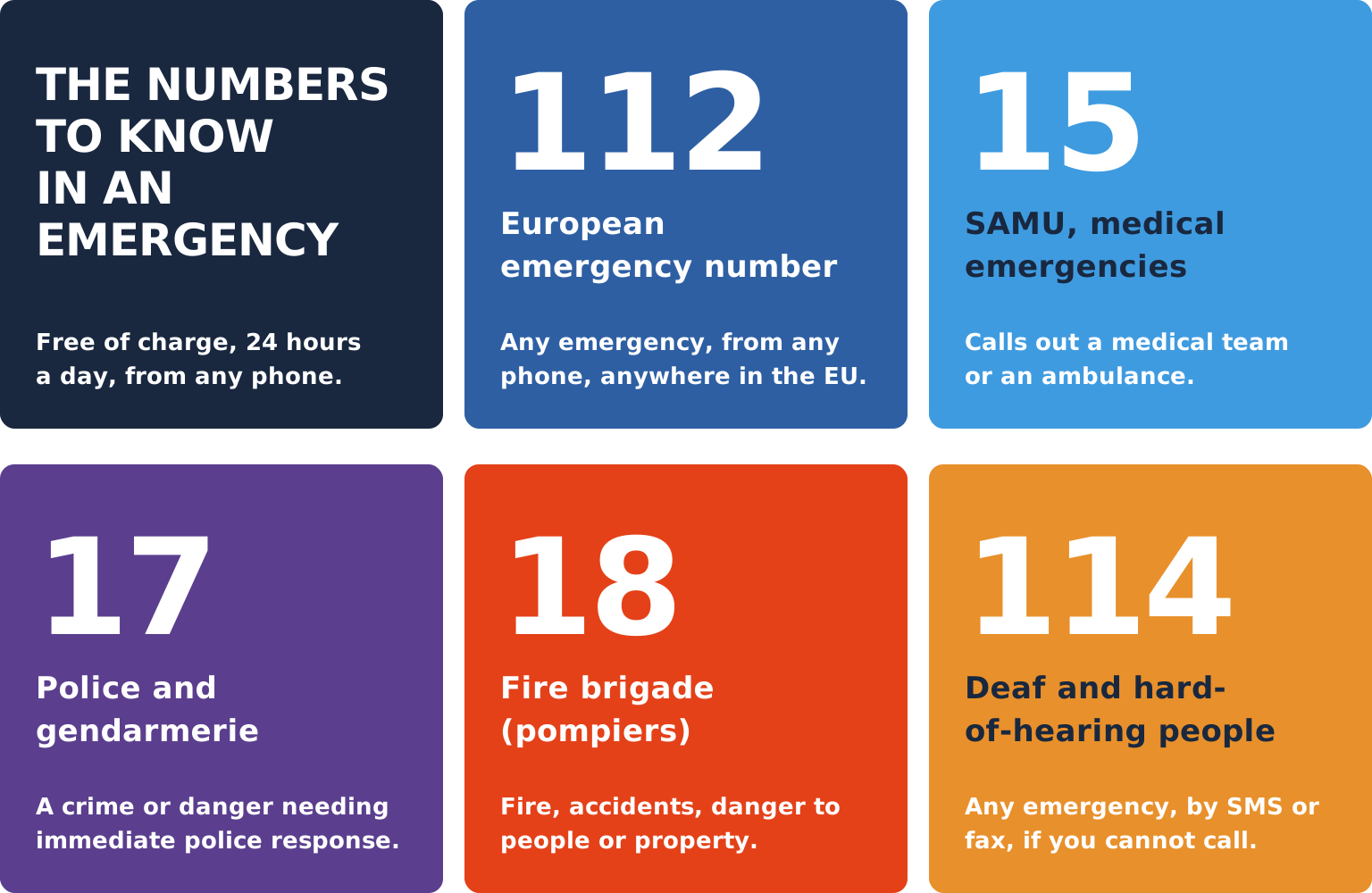
In an emergency, most people call 18, the number for the pompiers. The pompiers are the fire service in France, but they usually act as the emergency services, especially in rural areas. The gendarmerie, a military force that polices more rural areas, can also be called for a lot of things, and the SAMU is the ambulance service. Whoever answers may not speak fluent English, but they will try.
“Most people will call the 18, which is the pompier. Not always guaranteed that they’re going to be speaking fluent English, but they will try,” says Richard. You can find a list of numbers here for emergencies.
Emergency Phone Numbers in France
Use these emergency numbers to get through to the emergency services free of charge, 24/7.
Urgent Medical Help Through French Admin Support at French Connections HCB
Our French Admin Support service covers urgent appointments, even before you have registered. If you suddenly have a bad toothache or need to see a doctor, mark your email to Nathalie as urgent in the subject line so it is flagged straight away. Most clients can also contact her on WhatsApp. We can book urgent appointments online through Doctolib remotely, even slightly out of hours.
“If it is an urgent situation, just mark in the subject ‘urgent’ and that will flag up to me that that’s somebody that needs assistance quickly,” says Nathalie. This is just one of the main reasons choosing French Connections HCB for your move to France is so worth it: we are there for you when you need us.
The Biggest Mistake When Moving to France From the USA With Medical Needs
The most common mistake is arriving with a referral from an American doctor and expecting to be seen quickly by a French specialist. The referral will not be accepted, and you will need to see a French GP first. This is one of the most important things for Americans moving to France to understand before they arrive.
“When someone comes with an American referral from an American doctor and then wants to be seen quite quickly by a French specialist, it’s not going to happen,” says Nathalie.
Get Support With Moving to France Safely
Moving to France with medical needs takes planning, from choosing the right location to lining up GP and specialist appointments and checking your prescriptions in advance. The more you organise before you arrive, the less time you are likely to spend waiting once you are here.
We help people move to France, and our French Admin Support team supports clients with finding doctors, booking appointments, organising specialist care, checking prescriptions and arranging urgent help. Find out more about our France relocation services, or book a call with our team to explore your options on moving to France to talk through your medical needs before you move.
Thinking about your own move?
Every relocation is different. Get your free quote, or talk your plans through with the team: visas, healthcare, property and everything in between.
Start Your MoveJoin the newsletter
Relocation guidance we only send by email, not published on the blog, and our free Moving to France guide as soon as you sign up.
By subscribing you agree to our Privacy Policy. We respect your data.