

Stalled by a Complex Vehicle Registration
Richard Hammond-Chambers-Borgnis · 3 September 2026
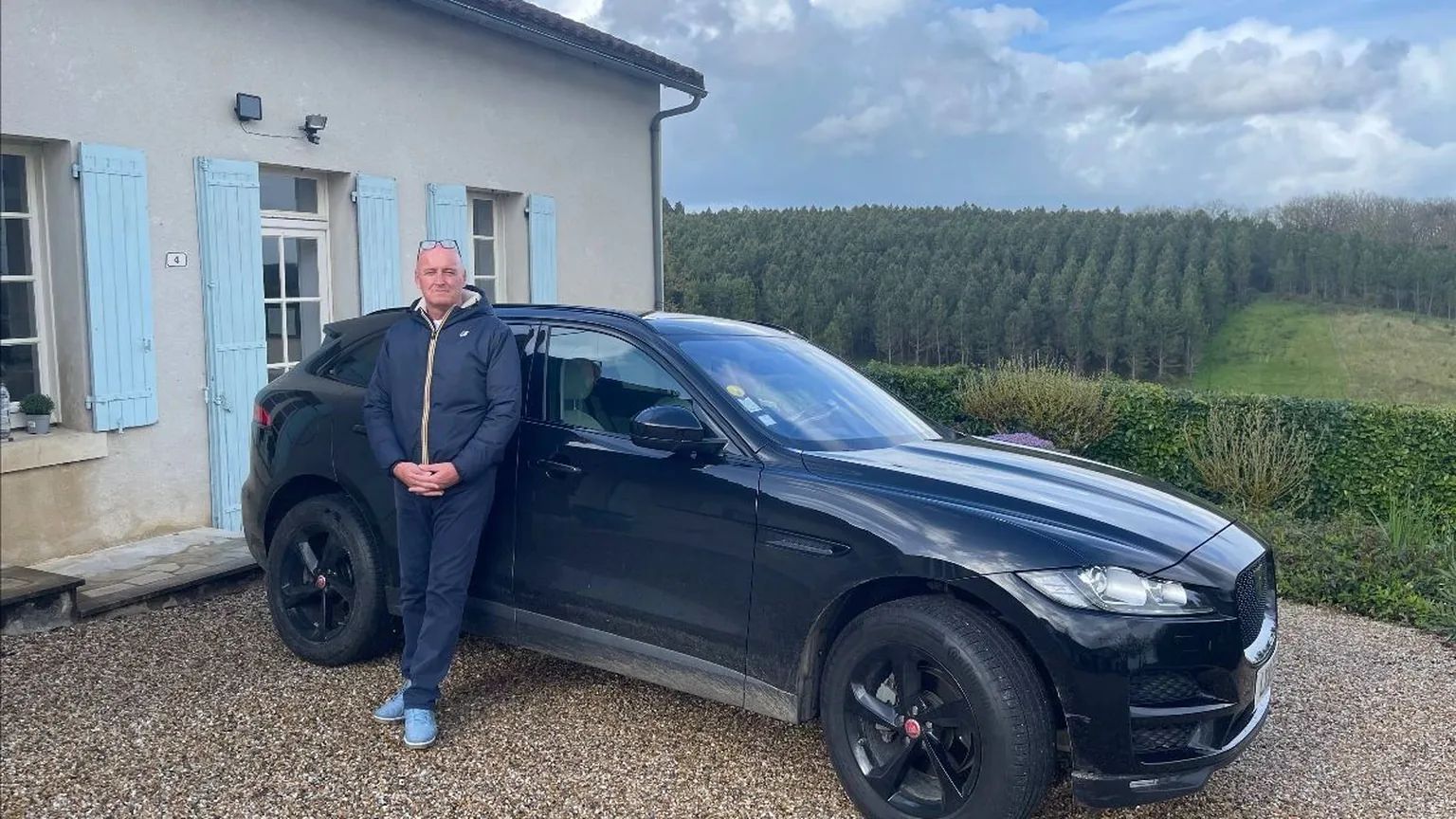
Suzi and Pete, a British couple who spent 30 years in Hong Kong before moving to Nice in 2019, bought the car Pete had always wanted from a dealer in the UK, then discovered that nobody could tell them how to register it in France. Their account is a warning about buying a car abroad before you know how it will be imported.
A dream car, at the wrong price
Suzi explains: “We needed to buy a car, but because we hadn’t been in France for very long, we couldn’t get anything on lease so we had to buy one outright. We were looking for an SUV type of vehicle, but when we went into the local Jaguar showroom Pete got into a Jaguar F-Pace and loved it. It was his dream car but at that point it was completely out of our budget. Brand new it was about €70–80,000.”
Then a trip back to the UK changed the picture.
“As things transpired, we had to go back to England for a funeral and while we were there, I stumbled across a left-hand-drive specialist centre. The guy was quite a convincing salesperson, so I thought it would be fairly trustworthy. My family and I went there together, saw a couple of cars and then the salesman said, ‘Oh, I happen to have a Swiss-registered black Jaguar F-Pace with beige interior coming in next week. One single lady owner and only 6,000 miles on the clock.’ Exactly the car that Pete had wanted! We obviously got very excited. We had to head back to France, but my brother said he would go and test drive it for us, which he did, and we bought it because it was £32,000 compared to €70–80,000 in France.”
The problems begin on delivery day
Suzi and Pete knew there would be import tax to pay in France. What they could not have anticipated was what arrived with the car, and what did not.
“The car arrived in Nice on the back of a low rider and the driver literally dropped it off and drove away. He left us no paperwork, no import documentation, no proof of delivery into France whatsoever.”
Pete adds: “It still had the Swiss number plates on it, so it hadn’t been officially registered in the UK, and with both the UK and Switzerland not being part of the EU, that’s where our problems started.”
That detail is the whole story. Switzerland is outside the EU customs union and, since 1 January 2021, so is the UK, so a car exported from Switzerland must be declared to customs on entry to the UK, and the same car, sold on and shipped from the UK, must be declared again on entry to France. Suzi and Pete’s Jaguar had been sold by a UK dealer and delivered from the UK, yet it was still on Swiss plates with no UK clearance or registration behind it, which left French customs with no paper trail they could accept.
Passed from pillar to post
Suzi went straight back to the seller. “We called the salesman at the car dealership where we bought the car and said we really needed to get it registered in France. He said, ‘Don’t worry about the paperwork, I’ve got a guy in France and he’ll be able to do it for you.’ He gave me the number of a guy who was a total shark, who said he generally only dealt in Lamborghinis from Abu Dhabi. He was an awful person. We sent him all the paperwork and details that he asked for, but his response was, ‘This isn’t really a job for me.’ We went back to the dealership and he said, ‘Oh yeah, it’s the first time I’ve ever recommended him to anybody. I’ve got other people that are much better’, and then nothing. He just went quiet and we never got any other recommendations from him.”
“Meanwhile we already had a hand-holding company that we had used to set up Pete’s company. They told us not to worry and claimed that they had the best car person in the South of France, so we paid them even more money to try and get the car registered, but they came back and said, ‘Oh, we can’t do it because you don’t have the required documentation for the Douane (Customs) in France.’ When we asked, ‘Where do we go from here?’ they just said it wasn’t their problem and we would have to figure it out ourselves.”
A viable route at last
“It was at that point that I started Googling and fortunately I found Richard at French Connections HCB. Richard was the first person to give us any sort of viable option. The car had been registered in Switzerland when we bought it. Richard said we would need to first change from Swiss registration to UK registration, and then we could import it legitimately from the UK into France.”
Putting the UK end right first was the key: once the car had been declared to HMRC, with the UK charges paid, and registered with the DVLA, it had a legitimate registration document from the country it was leaving, and it could be imported from the UK into France in the normal way.
Pete takes over the story. “Of course, the car dealership should have already legitimately imported the car from Switzerland to the UK, and they shouldn’t have sold it to us in the UK until that had been done. As a result, we had to pay two lots of customs duty, so the car has ended up costing us about £20,000 more than we thought. We ended up paying a bit over £6,000 to change the Swiss plates to UK plates, and then another €12,000 to register the British car in France.”
Pete wants their experience to serve as a warning to others. “I can’t imagine we are the only ones this has happened to. Richard told us that other clients have come to him after being stung by the same dealership and he has helped us report them to HMRC. We just don’t want anyone else to get stung like we did.”
Was the Jaguar worth it?
At the end of it all, has the Jaguar been a good car? By the time we spoke, it had passed its contrôle technique, France’s periodic roadworthiness inspection (the equivalent of the British MOT test), which an imported car more than four years old needs before it can be registered.
“Yes, it’s a brilliant car! In that respect we were very fortunate because the car only had 6,000 miles on the clock when we got it and it was two years old. We’ve had no mechanical problems with it at all. Our contrôle technique (the French MOT) has been completed and we now have the final approval to legally import the car to France. After that we can get French plates and then everything will be done and above board.”
Suzi is quick to admit that they would not have been able to sort out the registration on their own. “We wouldn’t have known where to start. He was the only person to suggest that the best route would be to go from Swiss to UK registration, then from the UK to France. His knowledge of the international market, not just the French market, is phenomenal. Also his willingness to help us report the car dealership that we bought from. You just sense that he wants to do the right thing for people.”
Pete agrees. “I just wish we had spoken to Richard before we bought the car. As future reference for other people reading this, before you buy a car, speak to him. His knowledge is just invaluable. As is his colleague Annabelle’s ability to get the paperwork done.”
Behind the scenes
French Connections HCB has handled vehicle registrations for clients arriving from all over the world, many of them after a so-called hand-holder or a dealer had left them stuck. Annabelle, who steered Suzi and Pete’s paperwork through French customs, takes on the complicated files, and our vehicle transport partner, whose efficiency Suzi and Pete also appreciated, moves cars for our clients.
What has changed since
The rules Suzi and Pete ran into still apply in 2026, and they now catch British movers as a matter of course: since the UK left the EU customs union in 2021, a car brought into France from the UK is treated like one from any other non-EU country, with customs duty (10% for a car, unless a trade agreement reduces it) and 20% VAT paid to French customs, which then issues the certificat 846A that ANTS needs before it will register the car. The one relief is the change-of-residence exemption: no duty or VAT if you have lived outside the EU for at least twelve months, have owned and used the car for at least six months before the move, and bring it in within twelve months of moving, on condition that you do not sell, lend or hire it out for twelve months afterwards. That relief only covers a car you already owned before the move, so it would not have helped in a case like this one. Our step-by-step guide to importing your car to France covers the full 2026 process.
Talk to us before you buy
If a car is part of your move, or you are thinking of buying one abroad to bring to France, our team handles vehicle importation and registration and can check the paperwork before you commit, then run the customs and ANTS process for you. As Suzi and Pete’s experience shows, the right advice at the beginning saves a great deal of time and stress, so book a consultation and tell us about the car before you spend anything on it.
Thinking about your own move?
Every relocation is different. Get your free quote, or talk your plans through with the team: visas, healthcare, property and everything in between.
Start Your MoveJoin the newsletter
Relocation guidance we only send by email, not published on the blog, and our free Moving to France guide as soon as you sign up.
By subscribing you agree to our Privacy Policy. We respect your data.