

Think French Tax Is Tough? Wait Until You Face a Contrôle Fiscal
Richard Hammond-Chambers-Borgnis · 29 August 2026
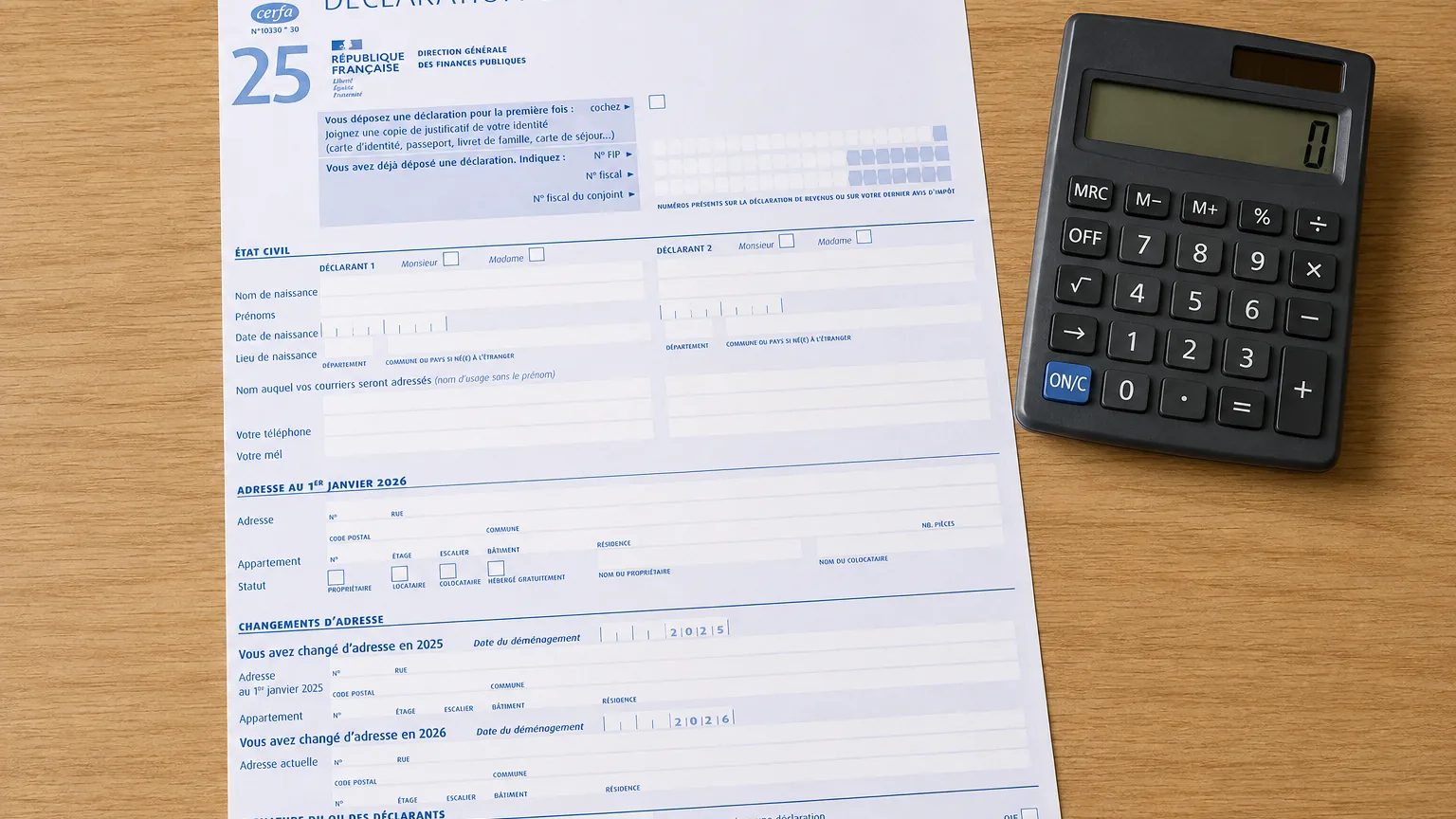
Nobody enjoys paying tax, but when you live in France, with its generous social security and its sense of fairness, at least you can feel a little better about it. Unless, that is, you become the subject of a contrôle fiscal, a tax inspection.
There is a lot of folklore about what the French tax office, the fisc, can do to you. Here is what an inspection actually looks like in 2026, followed by the areas where newcomers most often go wrong. Every figure has been checked against the official sources.
What a contrôle fiscal actually involves
Most checks never involve a visit. The tax office runs a contrôle sur pièces, a desk review matching your return against what it already knows from your bank, your employer, the notaire who handled your house purchase and the account data it receives automatically from other countries. If something does not add up, you get a written request for explanations, with two months to answer.
The heavier procedure for individuals is the ESFP (examen contradictoire de l’ensemble de la situation fiscale personnelle): an inspector compares your declared income with your assets, cash movements and lifestyle, and asks for bank statements to reconcile them. It is meetings and paperwork, not a raid, and must by law finish within a year of the notice (two if a hidden activity turns up). Businesses get the on-site version, the vérification de comptabilité, at their premises.
The scene people fear, agents at the door going through your laptop, exists only under article L16 B of the tax procedure code: it needs a judge’s order issued on a presumption of fraud, a police officer present, and cannot begin before 6am or after 9pm. Nobody installs themselves in your kitchen on their own authority.
How far back can they go? Three years for income tax, but ten where a foreign account, life-insurance contract or trust went undeclared (unless your foreign accounts never held more than €50,000 in total that year). Being caught costs interest at 0.20% a month plus a surcharge: 10% for late filing, 40% for a deliberate omission and 80% for fraud, a hidden activity or income from undeclared foreign accounts and trusts. And the oldest red flag still works: a modest village house with a new Ferrari outside it invites questions.
Our advice: get a good accountant, understand the reliefs you are legally entitled to, and pay the rest with good grace. Here is where people who mean well still trip up.
Property wealth tax (IFI)
First, what applies in 2026. The autumn 2025 budget debate produced a proposal to replace the IFI with an “impôt sur la fortune improductive” reaching into cash and financial assets. It did not survive: the loi de finances pour 2026 (law no. 2026-103 of 19 February 2026) left the IFI (impôt sur la fortune immobilière, the wealth tax on property) in place, and the figures below are the 2026 rules.
You are liable if the net taxable value of your property exceeds €1.3 million on 1 January. The trap is in the calculation: the scale starts at €800,000, with 0.5% on the slice from €800,000 to €1.3 million, 0.7% up to €2.57 million and higher bands beyond. So a portfolio worth €1,300,001 is not taxed on one euro; it is taxed on every euro above €800,000, softened only by a small discount (décote) between €1.3 million and €1.4 million.
Your main residence is valued with a 30% reduction. Everything else counts at full market value, and for a French tax resident that means property anywhere in the world, plus the property share of SCPI or OPCI funds, an SCI (a French property-holding company) and unit-linked life-insurance contracts. Not knowing what sits inside a managed fund is no defence. One relief for newcomers: arrive after five calendar years abroad and only your French property counts for the first five years.
Our advice: have your property professionally valued and keep the report with your return, because the notaire reports the price when you sell. Our guide to the French wealth tax works through the calculation.
Foreign bank accounts
Every account you hold outside France must be declared, every year, on form 3916 / 3916-bis with your income tax return (box 8UU online): every account opened, held, used or closed in the year, including dormant and joint accounts and those you merely hold a power of attorney over, plus foreign life-insurance contracts and cryptocurrency accounts. Each is declared separately, so a current account and an ISA at the same British bank are two accounts.
The fine is €1,500 per undeclared account per year, or €10,000 where the account sits in a state with no administrative-assistance agreement with France, plus the 80% surcharge and ten-year window above. Declaring them once, in your first French return, is not enough: each missed year is a separate fine.
Our advice: close the accounts abroad you do not use, keep the one or two you need for visits home, and list them all every spring.
Inconsistent income
A sudden jump in income from one year to the next is a warning sign to the software before it reaches a human. There is often a good reason, such as a parent going back to full-time work once the children start school. The return allows a mention expresse, a short note explaining an unusual figure, which also protects you from late-payment interest if the tax office later disagrees. Keep the evidence to hand; a clear answer usually ends it.
Tax-free gifts
France allows generous tax-free gifts within the family, but the limits and the clock both matter.
- Each parent can give each child up to €100,000 free of gift tax, renewable every 15 years.
- On top of that, a don familial de sommes d’argent (a family gift of money) of up to €31,865 is exempt if the donor is under 80 and the recipient is an adult, also renewable every 15 years.
- Until 31 December 2026, a temporary exemption from the 2025 budget adds up to €100,000 per donor (€300,000 per recipient) for money used within six months to buy a new-build main residence, kept for five years, or for energy-efficiency work on the recipient’s main home.
The 15-year clock is widely misunderstood. If the donor dies, or gives again, within 15 years, the earlier gift is not taxed twice; it is added back into the calculation (the rappel fiscal), so the allowance is not available again and the estate or new gift pays more. Outlive the 15 years and the allowance resets.
Since 1 January 2026 gifts of money must be declared online from the recipient’s espace particulier within one month. A gift of property, including a share of your home, must go through a notaire, and it is common to give the bare ownership (nue-propriété) while keeping the usufruit, the right to live in or let the property for life.
Our advice: use a notaire for any significant gift so both sides hold proof of what was given and when. Home-country gift and inheritance rules apply alongside the French ones.
You do not choose where you pay tax
Many people assume that because tax is deducted from their pension at home, their obligations are settled. Under article 4 B of the French tax code you are tax resident in France if your home (foyer) or main place of stay is here, if your main professional activity is here, or if the centre of your economic interests is here. More than six months a year in France is the usual rule of thumb, but not an absolute one. Meet any one test and France taxes your worldwide income, with the treaty deciding who taxes what.
For British readers: UK government-service pensions (civil service, armed forces, police) remain taxable only in the UK for a British national, though France counts them when setting the rate on your other income. The UK State Pension and private or occupational pensions are taxable in France once you live here.
For American readers: you file a US return every year wherever you live. Under the US–France treaty, US Social Security and distributions from US pension plans are taxable only in the United States, but you must still declare them in France, which grants a credit equal to the French tax.
Declaring nothing in France because you pay tax elsewhere is the surest route to a contrôle fiscal. Our guides to avoiding double taxation and your first French tax return cover the mechanics.
Our advice: if you live in France and pay tax somewhere else, take advice before the tax office writes to you, not after.
Trusts outside France
French law has no concept of the trust, so it demands transparency instead. If the settlor, a beneficiary or the trustee is French tax resident, or the trust holds French assets, the trustee must file two declarations: an event declaration (form 2181-TRUST1) within a month of the trust being created, changed or wound up, and an annual one (2181-TRUST2) by 15 June with the asset values at 1 January. The details go on to a central register of trusts.
The fine for a missed declaration is €20,000, with the 80% surcharge on any tax reassessed. The 1.5% levy people worry about (the prélèvement sui generis, set at the top IFI rate) is not a routine annual charge: it applies only where trust property that should have been declared for the IFI was not, never on top of the IFI for the same assets. It is a sanction, and trustee, settlor and beneficiaries are jointly liable. The declarations carry no official fee; what you pay for is the professional who prepares them.
Our advice: if you are becoming French tax resident, check whether the structures you set up before the move still make sense, and make any trust transparent to the French authorities from day one.
In conclusion, the best way to avoid a contrôle fiscal is to be fully compliant while making the most of the reliefs legitimately available to you.
Get your French tax affairs in order with French Connections HCB
We are relocation specialists rather than tax advisers, but compliance is part of every move we manage, and we work with English-speaking tax partners who handle cross-border cases every day. To talk through your situation before your first French return, book a consultation or see how our relocation services fit together.
Thinking about your own move?
Every relocation is different. Get your free quote, or talk your plans through with the team: visas, healthcare, property and everything in between.
Start Your MoveJoin the newsletter
Relocation guidance we only send by email, not published on the blog, and our free Moving to France guide as soon as you sign up.
By subscribing you agree to our Privacy Policy. We respect your data.