
A Warm Welcome Goes a Long Way in France
Richard Hammond-Chambers-Borgnis · 5 September 2026
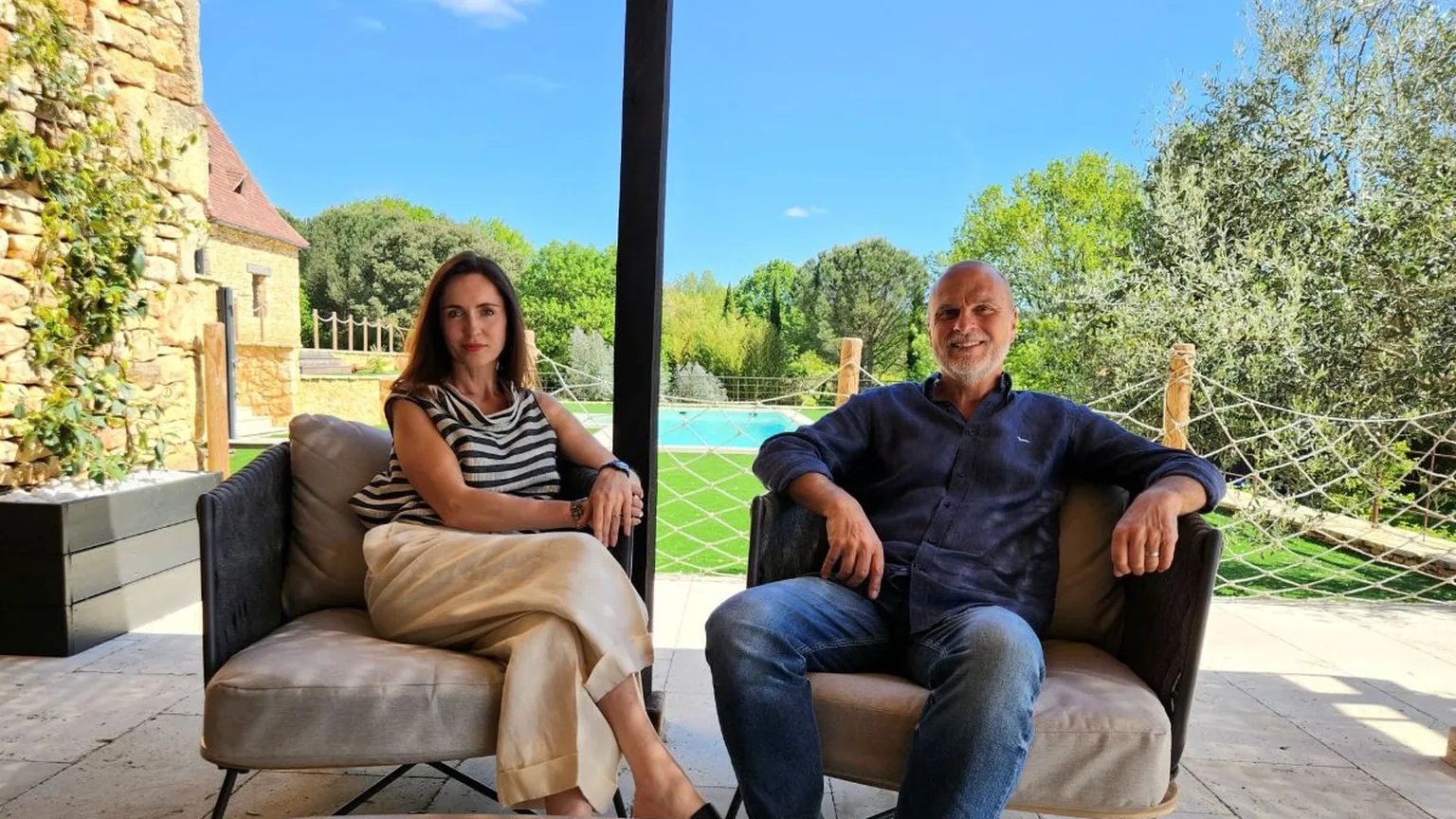
Tony and Natasha settled in the Dordogne together with Natasha’s mother, who was 75 at the time. Tony is from East London; Natasha and her mother are from Ukraine. The couple arrived one February, and Natasha’s mother followed a few months later, once they finally had the keys to the property they had bought. The welcome the three of them have received from their new hamlet is the heart of this story.
From lockdown television to the Dordogne
It was the end of a whirlwind adventure for all three of them, and it began with A Place in the Sun on the television during the Covid lockdowns.
“We were stuck indoors watching that in lockdown and then we came here on holiday for three years on the trot. We visited all the regions of the Dordogne and also travelled through France to visit other areas, such as the Loire Valley and the Champagne region, but we just fell in love with the Dordogne. There was just something about it that we weren’t expecting.”
For Tony, the pace of life was a revelation. “For me, it was like going back in time and I can revisit my childhood while I’m here. It reminds me very much of ‘Old England’, everyone’s smiling. I’m not saying they don’t smile in England, but it’s so friendly here! We realised that if we were to consolidate what we had in the UK, we could afford something really nice here and almost semi-retire, but have a gîte business as well…”
“That was naive thinking,” laughs Natasha. “We told the agent we didn’t want a project, but we ended up buying a huge project! We’ve just ordered 29 windows, so you can imagine the size and the scale of it.”
Meeting Richard
The programme was also how Tony and Natasha met our founder Richard, at the A Place in the Sun exhibition at Olympia in London. “We went to the ‘Place in the Sun’ show at Olympia and met Richard and his team on their stand there.”
Tony values the straight talking he got from the start. “What I like about Richard is there’s no leading you down a garden path and suddenly saying, ‘Oh sorry, we can’t go any further.’ He openly tells you the facts and the risks and how to do things the right way. French administration is a minefield! I’ve run my own businesses, been in the corporate world, and my experience is that if you’ve got experts in their field, try to use them if you can afford them because it will save you an awful lot of time and money and you will know where you stand. That was paramount for us because we were taking a huge risk by selling up.”
Sold in two weeks
Having that advice already in place mattered, because the move happened far faster than they had planned.
“We put our house on the market thinking it might take 6–8 months, but we sold within two weeks, cash buyer, full asking price! That sort of accelerated us putting in the offer on our house in France, which was accepted, and we were thinking, ‘Well, this is real now!’ To have Richard there to help us through the process of how fast the next steps would be, and knowing that we weren’t going to fall foul of being tripped up, was very reassuring because we were essentially homeless in the UK for about a month…”
Natasha agrees. “It was a bit more than a month actually. During that time, Tony stayed with his parents while Mum and I stayed with my sister, who also lives in London. After that, we rented somewhere here in France for a few weeks before we got the keys to the house, so we were apart in England but reunited in France!”
Tony smiles at the memory. “As lovely as it is moving back in with your parents and moving in with your sister, it made us realise how lucky we are to have our own house!”
Bringing Mum along
The plan always included Natasha’s mother, “whether she wanted to or not!” as Tony puts it. Tony is a British citizen and Natasha, who had lived in the UK for over 20 years, holds a British passport, so both needed long-stay visas for France, and so did Natasha’s mother. A parent is not covered by France’s family reunification procedure, so a parent joining her family normally applies for a visitor visa in her own name, showing that the family will house and provide for her and that she holds health insurance for her stay. Natasha’s mother’s application went in alongside Tony and Natasha’s own.
“We submitted Mum’s visa application along with ours, with her declared as a dependant. We had to provide a letter saying that we would be looking after her and that she would be living with us. She also needed special medical insurance because of her age.”
Tony admits that Natasha’s mother was initially hesitant about the property and the location they had chosen. “From what Natasha tells me, her experience of doing refurbs in Ukraine with Natasha’s father wasn’t always plain sailing, so she’s had some bad experiences. I think she was expecting something more finished on the main house; she found it quite grand but very big. The thing that really concerned her is that we are classed as rural, even though we are in a little hamlet, whereas Natasha and her mum have always lived in cities, in Ukraine and later on the outskirts of London, and it’s a huge change.”
Adopted by the hamlet
Being made welcome by the people around them has mattered enormously to all three.
Natasha explains: “We have lovely neighbours. Our nearest neighbour was a head gardener in Montpellier. His garden is absolutely spectacular, he should be charging money for people to go in! He gives us plants constantly as well as advice. He and his wife took us to the village where there was an African concert and they introduced us to local people and kind of adopted us in a way.”
Tony agrees: “Yes, we are very lucky to have them as neighbours because although he doesn’t speak much English, his wife is an English teacher, so she is helping us with our French and we are helping them with their English. The other neighbours are a selection: a couple from Paris who come here for the whole summer, and an English woman who has married a French guy. We are all really close. We’ve also met loads of people just around the area, mainly Brits but also a Russian and some more Ukrainians. We have a better social life here in a couple of months than we had in years in England.”
The first gîte
Meanwhile, the couple have pressed ahead with their first gîte (a self-catering holiday let).
“We are up and running! Thankfully we have two properties here that are liveable. The main house is not a refurbishment; it has been built very traditionally but it’s only 14 years old and is not completed, so it’s basically a blank canvas. Natasha sees it as quite daunting but I’m from the construction industry and for me, although it’s quite a big area to do, once we get started it will happen very quickly. We are marketing one of the gîtes this year, basically as a learning curve for us and something we can manage, so hopefully we don’t make too many mistakes. We also took a lot of advice from people in and around the area and we’ve spent 12 months doing our due diligence on what we need to do and the best way to do it. We put up our website and went on platforms three weeks ago and we’re almost fully booked for the period we anticipated, which is pretty good, we think.”
If a gîte is part of your own plan, the registrations and tax choices involved are set out in our guide to running a gîte in France and staying legal.
Healthcare, visas and the business
As they settle in, the support has continued, as Natasha explains. “We’ve just been to Bordeaux for our medical, so now Richard will be applying for our carte Vitale, and then in November he’ll apply for an extension of our visa.”
The Carte Vitale is the card that gives access to the French state health system once you are registered with CPAM, the local health insurance fund; our guide to CPAM and the Carte Vitale explains how that registration works.
Tony is the first to admit that Richard’s expertise has been crucial in navigating the business rules.
“Richard is helping with the set-up of the business and he registered our company for us. He has also given us strong advice on what we can and can’t do functionally as a business to fit in with Brexit rules. Not only regarding the gîte, but also working remotely back in the UK if I have to. All of that has been invaluable. With our visa, we want to be seen to be doing everything right and it helps to have a good understanding of how the process works on the legalities of Brexit. I don’t even think the French always know what the rules are; it seems to be a moving target!” laughs Tony.
One note for readers: what you may do alongside your visa, whether running a gîte or working remotely for an employer abroad, depends on the route you hold, and France has recently tightened how remote work on a visitor visa is treated, so check your own position with our free visa route checker before assuming anything.
Our YouTube channel has step-by-step videos on visa applications, car registration, buying a property, the carte de séjour and French health cover. And if you are planning a stay in the Dordogne, you will find Tony and Natasha’s gîte at latrilogiedor.com.
Start your own move with confidence
Whether you are still at the daydreaming stage or already have the keys, our team supports movers with visa applications, healthcare registration and settling in. If you would like to talk through your own situation, including who is coming with you, book a consultation and we will map out the steps together.
Thinking about your own move?
Every relocation is different. Get your free quote, or talk your plans through with the team: visas, healthcare, property and everything in between.
Start Your MoveJoin the newsletter
Relocation guidance we only send by email, not published on the blog, and our free Moving to France guide as soon as you sign up.
By subscribing you agree to our Privacy Policy. We respect your data.