

Retiring to France at 55: Your Early Retirement Visa Guide
Richard Hammond-Chambers-Borgnis · 7 August 2026
Bonjour, future retirees! Are you dreaming of swapping the daily grind for sun-drenched vineyards, bustling markets, and a slower pace of life in France? You’re not alone. The idea of early retirement in France, particularly at 55, is incredibly appealing, and with careful planning, it’s entirely achievable. At French Connections HCB, we help 30–40 people every month turn this dream into a reality, and we’re here to share our insights on how you can make your early retirement in France a resounding success.
Many assume early retirement is only for the super-rich, but France offers a surprisingly accessible pathway for those who have planned well. The key lies in understanding the visa requirements, financial thresholds, and the practicalities of setting up your new life. This comprehensive guide will walk you through everything you need to know, from visa applications to healthcare, ensuring you’re well-prepared for your exciting new chapter.
Understanding the French long-stay visitor visa for early retirement
The primary visa pathway for individuals looking to retire early in France at 55, without working, is the long-stay visitor visa (Visa de Long Séjour Visiteur). The application fee is €99, and since May 2026 a further €300 tax is due when you validate the visa after arriving in France. Processing typically takes 2–4 weeks, though this can vary depending on your application centre and time of year. This visa is specifically designed for non-EU/EEA/Swiss citizens who intend to reside in France for more than 90 days and do not plan to engage in any professional activity. It’s crucial to understand that this visa does not grant you the right to work in France, making it ideal for those who are financially independent and seeking early retirement. Meticulous preparation makes all the difference here; French Connections HCB has guided 1,200+ families through the process since 2017.
Key requirements for the long-stay visitor visa
Securing your French long-stay visitor visa involves meeting several stringent criteria, with financial self-sufficiency being paramount, as you must demonstrate sufficient funds to support yourself without working. You will need to provide proof of accommodation in France and comprehensive health insurance, alongside a commitment not to undertake any paid employment in France. The application process also requires a valid passport, recent passport-sized photos, and a completed visa application form, all of which must be submitted to the French Consulate or VFS Global centre in your country of residence.
Financial requirements for early retirement in France
To successfully retire at 55 in France, applicants must demonstrate robust financial independence. Consulates commonly work from a baseline of around €1,500 per month per person, with some expecting €1,800–€2,000 per month for a couple. A useful benchmark is the French minimum wage (SMIC), which is €1,823.03 gross per month as of January 2026 (around €21,876 per year) and is set to rise to roughly €1,867 from June 2026. This financial threshold ensures you can comfortably live in France without becoming a burden on the state.
Proving your financial self-sufficiency
When applying for your visa, you’ll need to provide comprehensive documentation of your financial situation. This could include bank statements showing a consistent income from pensions, investments, or rental properties, as well as proof of substantial savings. The French authorities want to see a clear and stable financial picture. For instance, many applicants demonstrate a liquid savings account with at least two years’ worth of living expenses, often exceeding €50,000 per person. It’s not just about meeting the minimum; it’s about demonstrating long-term financial security. Our France cost of living tool provides detailed insights into typical expenses, helping you budget accurately.
Practical tip for the FIRE movement: if you’re part of the FIRE (Financial Independence, Retire Early) movement, consider how your investment portfolio can generate a consistent, verifiable income stream. French consulates prefer to see regular income rather than just a large lump sum in savings. Annuities, dividends, or regular withdrawals from a managed investment account are often viewed favourably. Ensure your financial statements are translated into French by a certified translator.
Navigating the French healthcare system as an early retiree
Access to healthcare is a critical consideration for anyone planning early retirement in France, and the French healthcare system is renowned for its quality and accessibility. As a condition of the visitor visa, you must arrive with comprehensive private health insurance covering your first year of residency. Separately, once you have lived in France on a stable and regular basis for three months, you become eligible to apply to join the French state healthcare system, known as Protection Universelle Maladie (PUMa), which provides comprehensive coverage. Many early retirees keep their private policy running for the first year anyway, both because the visa requires it and because CPAM registration takes time to come through.
Private vs state healthcare
Your private health insurance policy must meet specific criteria set by the French government. This typically means annual coverage of at least €30,000 for medical expenses and repatriation. Once registered with PUMa, you will receive a carte Vitale and benefit from the highly subsidised French healthcare system, where a significant portion of medical costs, including doctor visits, prescriptions, and hospital stays, is reimbursed.
One point that matters particularly for early retirees: PUMa membership can come with an annual contribution called the cotisation subsidiaire maladie (CSM). It is charged at 6.5% on capital income (such as investment and rental income) above a threshold of around €24,030 per year in 2026, and the amount is capped. Recipients of a pension (or unemployment benefit) are exempt, so the CSM mainly affects early retirees living off investments before their pensions begin. It’s worth factoring into your financial planning. For more detailed information, consult our guide to the French healthcare system.
Accommodation and residency: finding your French home
Proof of accommodation is a mandatory requirement for your French visa application, demonstrating that you have a stable place to live upon arrival. This can be a rental agreement, a property deed if you’ve purchased a home, or a formal attestation d’hébergement (a letter from your host) if you’re staying with friends or family. It’s advisable to secure your accommodation before applying for your visa, as this strengthens your application considerably.
Choosing your location
France offers a diverse range of environments, from the vibrant cities of Paris and Lyon to the tranquil countryside of Provence or the charming coastal towns of Brittany. Your choice of location will significantly impact your cost of living and lifestyle. Researching different regions and considering factors like proximity to amenities, community activities, and climate will help you find your ideal retirement spot. Remember, the earlier you start exploring, the better. Consider a reconnaissance trip to get a feel for different areas before making a commitment.
The French visa application process: step by step
The French visa application process, while detailed, is manageable with careful attention to detail. The first step involves gathering all necessary documents, including your passport, financial statements, proof of accommodation, and health insurance. You will then complete the online application form via France-Visas, the official government portal.
Submitting your application
Once your online application is complete, you’ll need to book an appointment at your nearest VFS Global centre or French Consulate to submit your physical documents and provide biometric data (fingerprints and a photograph). It’s crucial to arrive prepared with all original documents and photocopies. After submission, the processing time can vary, so it’s wise to apply well in advance of your intended move date. Our free visa checker can help you see the likely route before you start.
Post-arrival formalities: settling into your new life
Your journey doesn’t end once you arrive in France with your visa. Within three months of your arrival, you must validate your long-stay visa online via the ANEF portal (administration-etrangers-en-france.interieur.gouv.fr), paying the €300 validation tax at that point. This step is crucial as it officially registers your residency in France and allows you to apply for your titre de séjour (residency permit) when your initial visa is nearing its expiry. Failing to validate your visa can lead to complications with your legal status.
Integrating into French society
Embracing the French way of life is one of the most rewarding aspects of early retirement. Learning French, even basic phrases, will significantly enhance your daily interactions and integration. Joining local clubs, participating in community events, and exploring local markets are excellent ways to meet new people and immerse yourself in your new surroundings. France offers a rich cultural tapestry, and engaging with it will make your retirement truly fulfilling.
Why choose French Connections HCB for your early retirement journey?
At French Connections HCB, we understand that moving to a new country, especially for early retirement, involves a myriad of complex decisions and processes. We specialise in making your relocation to France as smooth and stress-free as possible. From navigating the intricacies of the French visa system to providing personalised advice on finding accommodation, understanding healthcare, and integrating into local life, our experienced team is here to support you every step of the way. We pride ourselves on transparent pricing and offer bespoke packages tailored to your individual needs.
We provide practical, actionable advice to the 30–40 people we help move to France every month, helping you avoid common pitfalls and ensuring your early retirement in France is everything you’ve dreamed of.
Key takeaways for early retirement in France at 55
- The primary visa for early retirement in France without working is the long-stay visitor visa: €99 to apply, plus a €300 tax at validation, with processing typically taking 2–4 weeks.
- Applicants must demonstrate financial self-sufficiency: budget on at least €1,500 per month per person (some consulates expect €1,800–€2,000 for a couple), with the SMIC (€1,823.03 gross per month as of January 2026) a useful benchmark.
- Comprehensive private health insurance (typically at least €30,000 of cover) is a visa condition for your first year; separately, you become eligible for state healthcare (PUMa) after three months of stable residence in France.
- Proof of accommodation, such as a rental agreement or property deed, is a crucial requirement for the visa application.
- The visa must be validated online via the ANEF portal within three months of arrival in France, when the €300 validation tax is paid.
- Learning basic French and actively engaging with local communities significantly aids integration into French society.
- French Connections HCB offers expert, personalised relocation support, having helped 1,200+ families move to France since 2017.
Don’t just dream about early retirement in France; let us help you make it happen. Book a consultation and we’ll walk you through every step, from visa strategy to your first carte Vitale.
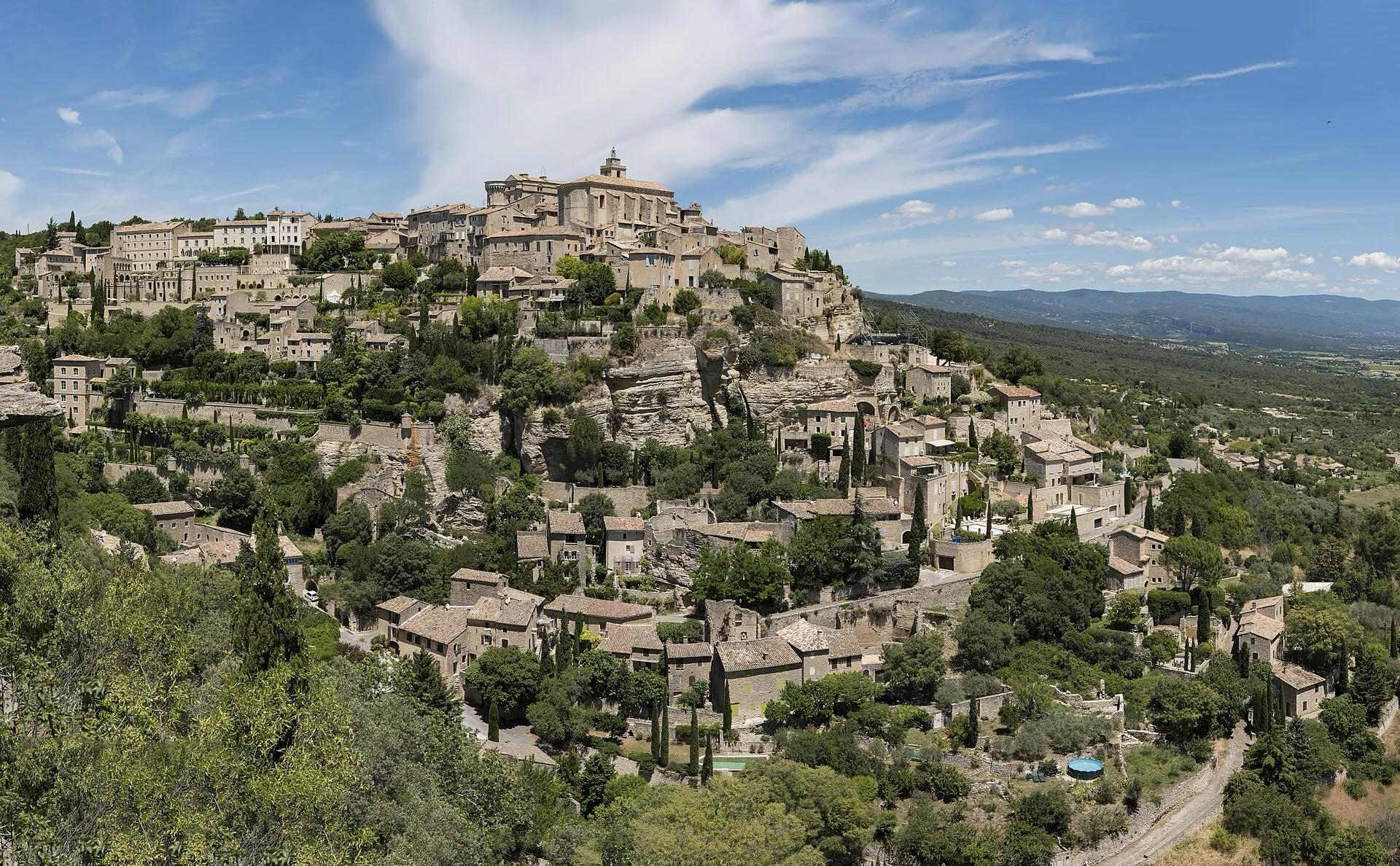
Cover photo: Chensiyuan, Gordes, Provence, CC BY-SA 4.0.
Thinking about your own move?
Every relocation is different. Get your free quote, or talk your plans through with the team: visas, healthcare, property and everything in between.
Start Your MoveJoin the newsletter
Relocation guidance we only send by email, not published on the blog, and our free Moving to France guide as soon as you sign up.
By subscribing you agree to our Privacy Policy. We respect your data.