

Education in France: A Comprehensive Guide for Expats with Children
Richard Hammond-Chambers-Borgnis · 17 August 2026
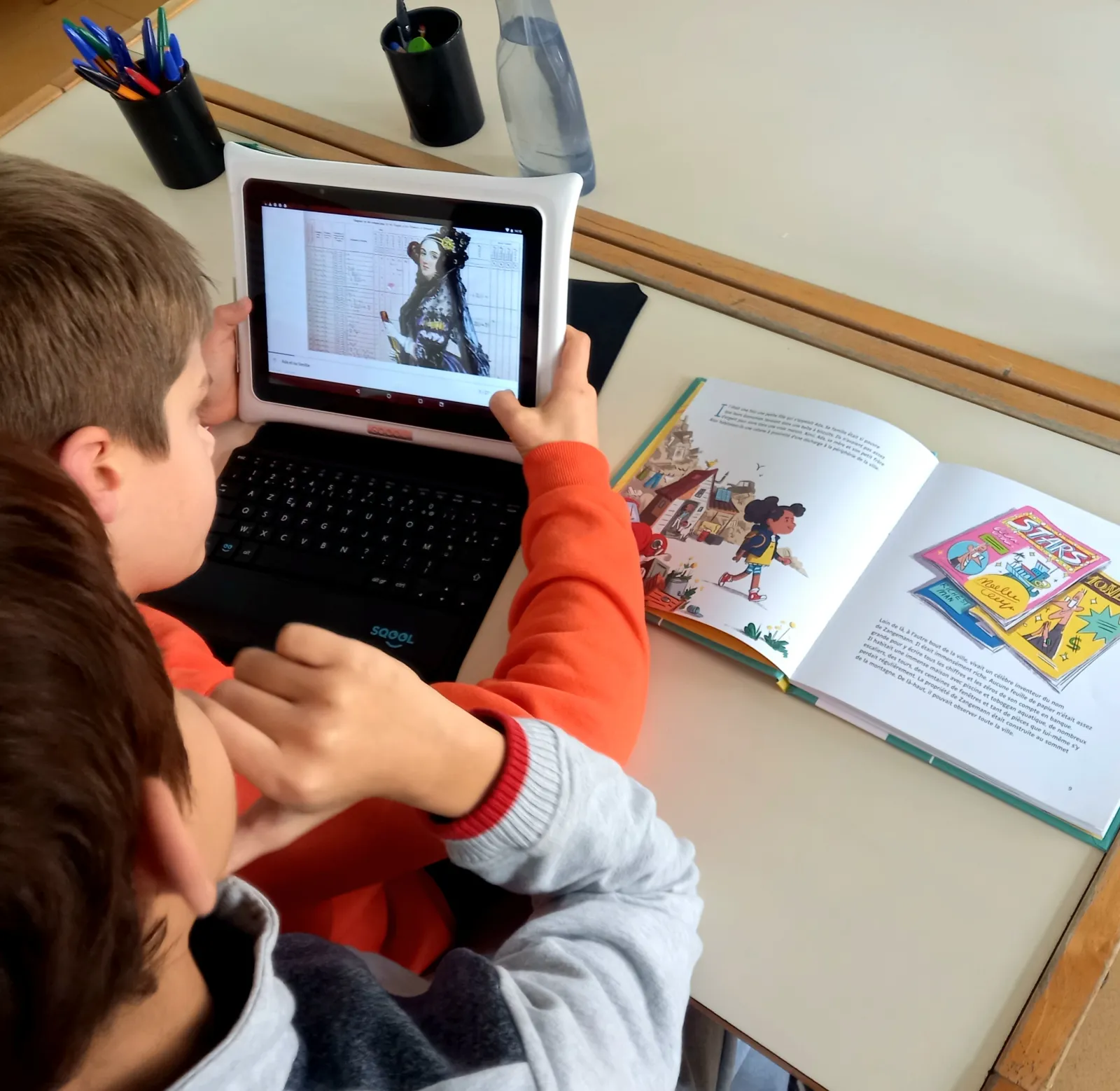
For families moving to France, schooling is the question that sits above all the others. The visa, the house and the bank account matter, but nothing focuses the mind like wondering whether your eight-year-old will be happy in a classroom where nobody speaks English. The good news: France takes education seriously, funds it generously, and has well-established systems for welcoming children who arrive without a word of French. The less good news is that the system is organised quite differently from what American parents are used to, and the vocabulary alone (CP, CM2, sixième, terminale) can feel like a code you were never given. This guide breaks the code: the structure, your schooling options, how enrolment works once you arrive, and the everyday differences that surprise American families most.
How the French system is organised
Education in France is compulsory from age 3 to 16, a change made in 2019 that gave France the earliest mandatory start in the EU, and from 16 to 18 young people must remain in some form of education or training. In practice almost every child attends the free public école maternelle from 3 anyway.
The stages, with rough US equivalents:
| French stage | Classes | Ages | US equivalent |
|---|---|---|---|
| École maternelle | Petite, Moyenne, Grande Section | 3–6 | Preschool and kindergarten |
| École élémentaire | CP, CE1, CE2, CM1, CM2 | 6–11 | Grades 1–5 |
| Collège | 6ème, 5ème, 4ème, 3ème | 11–15 | Grades 6–9 (middle school) |
| Lycée | Seconde, Première, Terminale | 15–18 | Grades 10–12 (high school) |
Two quirks worth noting. First, French secondary classes count down rather than up, so a child entering collège starts in sixième (6th) and finishes in troisième (3rd). Second, lycée splits into general, technological and vocational tracks, with the general track leading to the baccalauréat. The modern bac blends continuous assessment (40% of the final grade) with final exams (60%) in two chosen specialty subjects, philosophy and an oral defence known as the Grand Oral. It is a more demanding, more specialised finish than a US high school diploma, and universities in Europe and the US recognise it well.
Public, private and international schools
Public schools educate the large majority of French children and are free, secular and run to a single national curriculum. Standards are solid across the country, one of the quiet advantages of moving here: you are not locked into a handful of expensive zip-code equivalents to find a good school. The obvious catch is that teaching is in French, but the system has a dedicated answer for that, covered below.
Private schools in France will surprise Americans expecting American price tags. Around 95% of them are sous contrat, meaning under contract with the state: the government pays the teachers, the school follows the national curriculum, and families pay a modest contribution that commonly runs from a few hundred euros to roughly €2,000–2,500 a year once lunches are included. Most are nominally Catholic but open to all. Smaller classes and a slightly more pastoral culture are the usual draws. A small hors contrat (fully independent) sector exists too, with higher fees and freedom from the national curriculum.
International and bilingual schools teach partly or wholly in English, following American, British or International Baccalaureate programmes. They make sense for older children, short postings, or families who want continuity with a US curriculum. They cluster around Paris, Lyon, Toulouse, Bordeaux, Nice and Geneva’s French hinterland, and they are the expensive option: bilingual schools often charge several thousand euros a year, while the full international schools in the Paris region run from roughly €20,000 to over €40,000 a year at the top end. Budget accordingly, and factor it into your wider numbers with our cost of living guide.
A rule of thumb we share with clients: the younger the child, the stronger the case for French public school. A five-year-old will be chattering in French within months. A fifteen-year-old two years from the bac has a much harder equation, and that is where international options earn their fees.
Enrolling your child once you arrive
For public école maternelle and élémentaire, enrolment starts at your local mairie (town hall). You will typically need proof of address (a utility bill or rental contract), your identity documents, your child’s birth certificate, and their health record showing the compulsory childhood vaccinations. The mairie issues an enrolment certificate and assigns your child to the school serving your address, and you then finalise the registration with the school’s director. For collège and lycée you deal with the school or the local education authority directly, and private and international schools handle their own admissions.
Mid-year arrivals are completely normal, and a place at the local public school is a legal entitlement for any child resident in France, whatever their nationality or visa status. That said, bring more paperwork than you think you need, and expect the process to feel formal. Our French bureaucracy survival guide applies to school enrolment just as much as to the préfecture.
One planning note: get the school question moving before you land, because term starts in early September nationwide and international schools in particular fill up. If you are still mapping out the move itself, our long-stay visa guide for Americans covers the step that comes first.
Language support for non-French-speaking children
This is the part that reassures anxious parents most. Public schools have a national framework for newly arrived children who do not speak French, known as UPE2A (unité pédagogique pour élèves allophones arrivants). After an assessment of your child’s level, they join a mainstream class with children their own age and are pulled out for several hours a week of intensive French with a specialist teacher, normally for up to a year or so. Subjects like maths, sport, art and music carry on in the mainstream class from day one, which is precisely where friendships and playground French are built.
Provision is strongest in towns and cities; in deep rural areas your child may instead get travelling support or simply a patient teacher and full immersion. Either way, younger children absorb the language at a speed that startles their parents. It is the parents, in our experience, who need the French lessons.
What surprises American parents
- No school on Wednesdays. Most primary schools run a four-day week: Monday, Tuesday, Thursday, Friday. Municipal activity centres (centres de loisirs) fill Wednesdays with sport and activities for working parents, usually booked through the mairie.
- Long days, long lunches. A typical primary day runs from about 8:30 to 16:30, with a lunch break of up to two hours. The subsidised school canteen serves a proper multi-course meal, and menus are published in advance. Packed lunches are rare.
- The school supplies list. Each summer you receive a famously precise liste de fournitures: exact notebook formats, specific pen colours, a particular type of folder. Resist improvisation; buy the list.
- Grading and tone. Marks are out of 20, praise is rationed, and 14/20 is a genuinely good grade. The culture is more formal and academic than most US schools.
- Real vacations. Roughly two weeks off every six weeks, plus a long summer break, staggered by zone across the country.
Choosing where to live with schools in mind
Because public schools are consistently decent, schooling rarely dictates the town the way districts do in the US, but it should still shape your shortlist. Families needing an international school must stay within reach of a major city. Families going the public route should think about the practical texture: a rural village may bus older children a long way to collège, while a mid-sized town puts every stage within cycling distance. Our guide to French regions worth considering is a good starting point, and our region matcher will shortlist areas based on your family’s priorities. For proof that the leap works in real life, read how the Three family moved from Philadelphia with children in tow.
A brief word on homeschooling, since some American families ask: since the 2022 school year it requires prior authorisation from the education authority, granted only on specific grounds such as health, elite sport or arts training, itinerancy, or a particular situation justifying an educational project. It is no longer the default option it is in much of the US, so do not build your plan around it without advice.
Move your family with French Connections HCB
Schools are one thread in a move that also involves visas, housing, healthcare and a great deal of French paperwork, and the threads all pull on each other. Our relocation services cover the whole picture, including liaising with mairies and schools in French, so your children’s education is arranged before the boxes arrive. If you are planning a family move, book a consultation and tell us about them. We have walked many families through that first rentrée, and it is a pleasure every time.
Cover photo: FramaKa, a classroom in the Paris suburbs, CC BY-SA 4.0.
Thinking about your own move?
Every relocation is different. Get your free quote, or talk your plans through with the team: visas, healthcare, property and everything in between.
Start Your MoveJoin the newsletter
Relocation guidance we only send by email, not published on the blog, and our free Moving to France guide as soon as you sign up.
By subscribing you agree to our Privacy Policy. We respect your data.